Match the repair to the handling concern, then account for any alignment the work requires.
Worn steering or suspension components can change how a vehicle handles. We evaluate the concern and inspect the components that keep it stable and responsive.
Clunks, bouncing and steering changes can come from different parts of the vehicle. A useful evaluation considers tires, steering joints, suspension components and the conditions that produce the concern. The goal is to identify the source and explain how the repair relates to control, ride comfort and tire wear.
What controls ride height, wheel movement and steering
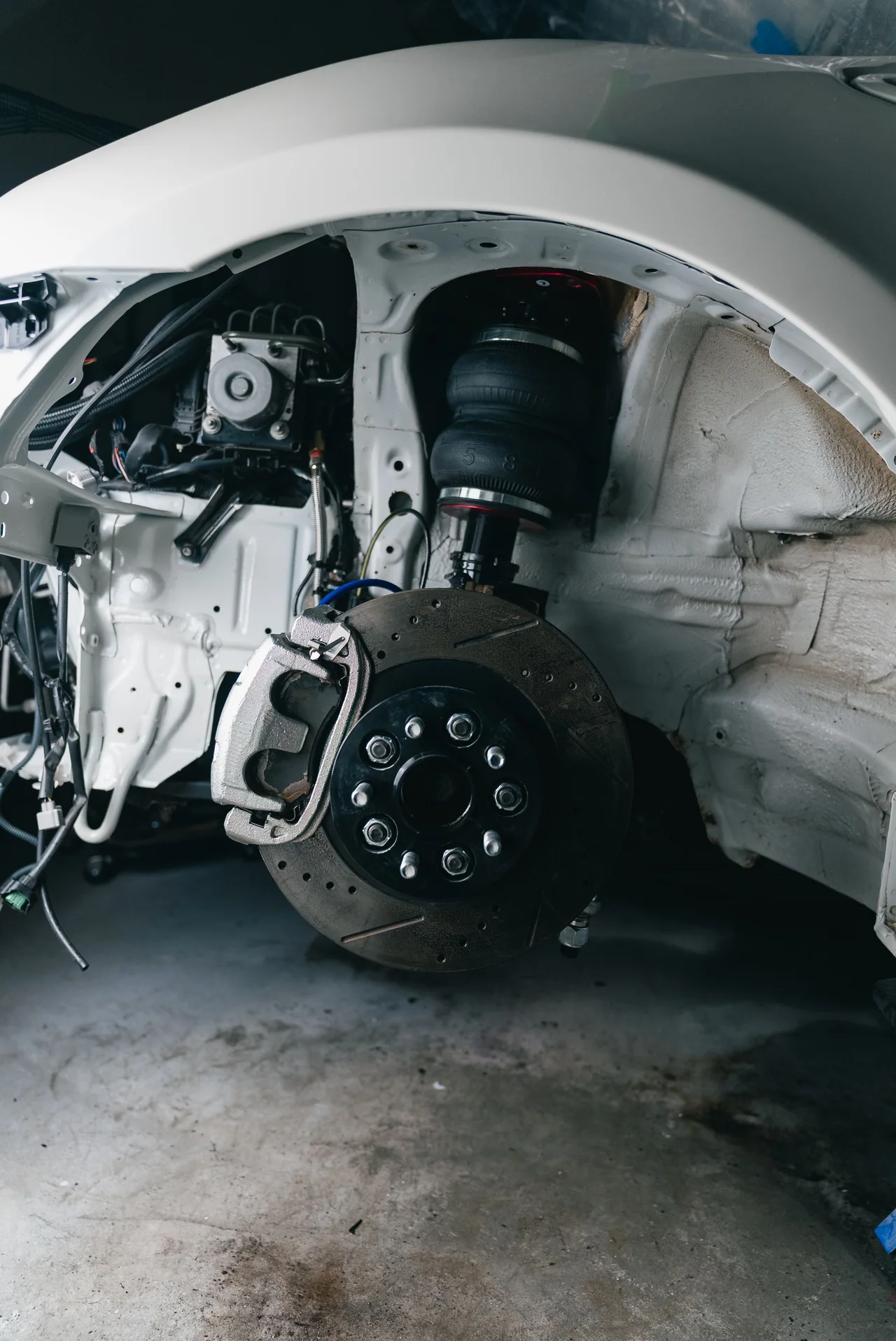
Springs support the vehicle, while shocks or struts control how quickly the suspension moves after a bump. Control arms, joints and bushings allow the wheels to move through their intended path. A strut also forms part of the suspension’s structure, so replacing a shock and replacing a strut are not interchangeable jobs.
The steering system changes wheel direction through the steering gear and connected components. Depending on the vehicle, steering assistance may be hydraulic or electric. Tire condition, wheel bearings and suspension geometry influence the result, which is why a steering-wheel vibration or loose feeling does not identify a single failed part by itself.
Signs it’s time for a closer look.
- Clunks over bumps
- Loose steering feel
- Bouncing or uneven tire wear
Some steering or suspension repairs require a follow-up alignment.
A clunk over a bump or during a turn
A joint, mount, bushing or another component can make noise as load changes. Note whether the sound occurs on one side, over small repeated bumps or during a slow turn. A clunk while changing direction may require a different investigation from a continuous hum at road speed.
Repeated bouncing or a floating feeling
Inadequate damping can allow excessive movement after a bump, but tire condition, load and other suspension issues can also change ride quality. A visual check for obvious leakage alone does not fully describe ride-control performance. Explain how the vehicle behaves and when that behavior changed.
Heavy steering, delayed response or a warning
A change in steering effort can involve the assistance system or mechanical components. Electric and hydraulic systems need different checks. If control changes suddenly, stop safely and contact the shop about transport rather than assuming an alignment adjustment will correct the problem.
What an inspection may cover.
The checks depend on your vehicle and symptoms. Your shop will confirm the diagnostic scope before work begins.
Steering connections
Tie rods, joints and related connections are evaluated for wear or movement using procedures appropriate to the vehicle’s design.
Ride-control components
Shocks, struts, mounts and springs may be checked for leaks, damage or other condition concerns relevant to the reported symptom.
Supporting components
Bushings, bearings and tires help complete the picture. Their condition can affect handling or create sounds similar to suspension wear.
Repair and service options.
Your vehicle may need one of these services, a combination, or a different repair. Inspection helps determine the right next step.
Shocks, struts & mounts
The appropriate repair depends on the component design and findings. The estimate should identify the parts included and any related mounting hardware.
Joints, arms & bushings
Some worn parts are replaceable separately; others are supplied as an assembly. Vehicle design and condition determine the practical repair options.
Alignment after repair
Some steering and suspension work changes wheel geometry. Alignment requirements should be considered with the repair, not discovered after the vehicle is collected.
Understanding your options.
Replacing a complete assembly or individual parts
A control arm may include bushings or a joint, and a strut assembly may include components beyond the damper. Compare exactly what each option contains, the condition of parts being reused and applicable vehicle requirements. A lower parts price alone does not explain the full installation scope.
Repairing wear before setting wheel angles
An alignment cannot hold a worn joint still. Movement, damage or incorrect ride height can interfere with reliable measurements. Ask which repairs affect alignment and whether the estimate accounts for the required checks or adjustments after those parts are installed.
Standard suspension versus modified or adaptive systems
Lift kits, lowering parts and electronically controlled dampers can change parts selection and service requirements. Provide those details before scheduling. Equipment compatibility, suitable specifications and any additional setup must be confirmed for the actual vehicle rather than assumed from its model name.
What affects cost and timing?
- The worn component and whether it is serviced separately or as an assembly
- Electronic or vehicle-specific suspension equipment
- Related alignment, hardware and access requirements
How long will it take?
A single worn joint and a concern involving several components require different plans. Inspection, compatible parts and any alignment requirements determine the estimated completion window.
Before your visit.
- Describe whether the noise occurs on bumps, turns or while braking.
- Mention pothole impacts, recent tire changes or suspension modifications.
- Explain whether the concern is felt in the steering wheel, seat or whole vehicle.
After the service: what to understand and monitor.
- Review whether wheel alignment or another setup procedure was part of the repair and keep any measurements with the service record.
- Tell the team if the original clunk, steering change or vibration remains. Identify the conditions without deliberately recreating an unsafe handling situation.
- Continue watching tire wear and ride behavior. A repair can correct a contributing cause, but it cannot replace tread already lost or repair existing tire damage.
About steering & suspension.
Will an alignment fix loose steering or a clunk?
An alignment adjusts wheel angles; it does not repair worn joints, bushings or other damaged parts. Component condition should be checked before deciding on alignment alone.
Are shocks and struts the same repair?
They both help control suspension movement, but their designs and roles differ. Your vehicle’s suspension layout determines the parts and installation procedures required.
Does uneven tire wear prove a suspension problem?
No. Inflation, tire condition, alignment and worn components can all contribute. Looking at the wear pattern together with measurements helps narrow the cause.
Can a modified truck be evaluated?
Tell the shop about lift kits, wheel changes and other modifications first. The team needs to confirm equipment compatibility and the appropriate specifications before scheduling the work.
Does a comfortable ride mean the suspension is healthy?
Not necessarily. Some worn joints or bushings may have little effect on comfort before they affect wheel control or tire wear. Conversely, a firm ride can be normal for a particular suspension design. Symptoms and inspection findings should be considered together.
Can power-steering fluid fix every heavy-steering problem?
No. Some vehicles use electric assistance and have no hydraulic steering fluid. On hydraulic systems, low fluid still needs an explanation. Follow the vehicle-specific guidance and have a sudden change in steering effort evaluated rather than adding an unspecified fluid.
Why might an estimate include mounts or bushings?
These parts locate components and manage movement or vibration. Their condition may affect the repair, and some are supplied within an assembly. Ask which are worn, which are required by the procedure and which are optional recommendations before approving the scope.
Talk with your local PAC team.
Choose the shop you plan to visit for steering & suspension. Share your vehicle year, make, model and the concern you’re noticing so the team can confirm the appropriate evaluation, vehicle compatibility and availability. Pasadena has two PAC locations; use the street name to reach the right team.
Understand the work before you approve it.
Talk through the findings, estimate and next steps with your PAC team. Ask which repairs qualify for the nationwide 2-year/24,000-mile warranty and review the coverage terms.
Explore warranty coverage